The music that composers make can be heard through several media; the most traditional way is to hear it live, in the presence, or as one of the musicians. Live music can also be broadcast over the radio, television or the internet. Some musical styles focus on producing a sound for a performance, while others focus on producing a recording which mixes together sounds which were never played "live". Recording, even of styles which are essentially live, often uses the ability to edit and splice to produce recordings which are considered better than the actual performance.
As talking pictures emerged in the early 20th century, with their prerecorded musical tracks, an increasing number of moviehouse orchestra musicians found themselves out of work.[6] During the 1920s live musical performances by orchestras, pianists, and theater organists were common at first-run theaters[7] With the coming of the talking motion pictures, those featured performances were largely eliminated. The American Federation of Musicians took out newspaper advertisements protesting the replacement of live musicians with mechanical playing devices. One 1929 ad that appeared in the Pittsburgh Press features an image of a can labeled "Canned Music / Big Noise Brand / Guaranteed to Produce No Intellectual or Emotional Reaction Whatever" [8]
Since legislation introduced to help protect performers, composers, publishers and producers, including the Audio Home Recording Act of 1992 in the United States, and the 1979 revised Berne Convention for the Protection of Literary and Artistic Works in the United Kingdom, recordings and live performances have also become more accessible through computers, devices and internet in a form that is commonly known as music-on-demand.
In many cultures, there is less distinction between performing and listening to music, as virtually everyone is involved in some sort of musical activity, often communal. In industrialised countries, listening to music through a recorded form, such as sound recording or watching a music video, became more common than experiencing live performance, roughly in the middle of the 20th century.
can be programmed to produce and play Sometimes, live performances incorporate prerecorded sounds. For example, a DJ uses disc records for scratching, and some 20th-century works have a solo for an instrument or voice that is performed along with music that is prerecorded onto a tape. Computers and many keyboardsMIDI music. Audiences can also become performers by participating in Karaoke, an activity of Japanese origin which centres around a device that plays voice-eliminated versions of well-known songs. Most karaoke machines also have video screens that show lyrics to songs being performed; performers can follow the lyrics as they sing over the instrumental tracks







 After watching Lagaan, Iqbal and Chak De India, if you thought sports underdog drama is the recipe to set box office on fire, you’re wrong. No other movie could prove it better than Dhan Dhana Dhan Goal.


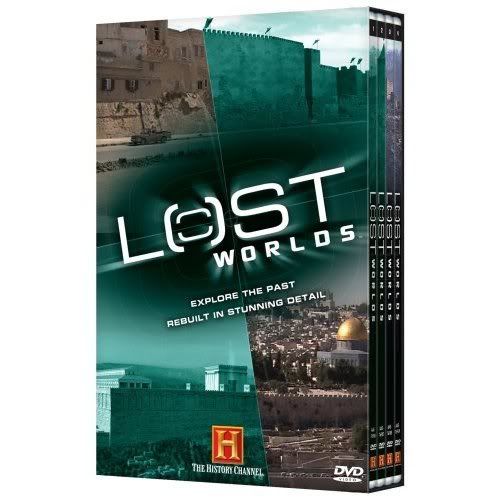 The monuments of the ancient world are virtually brought back to life in Lost Worlds, a fantastic History Channel series that combines historical expertise and computer generated imagery to restore ancient structures to their original condition. Just as the packaging promises, this riveting 13 part series allows viewers to explore the past rebuilt in stunning detail, following a format as richly educational as it is visually impressive. The 50 minute episodes are loosely grouped by historical epoch, beginning with the Christian emphasis of disc 1, with episodes focusing on the Knights Templar (showing the virtual reconstruction of the city of Tortosa), Jesus Jerusalem (focusing on Herods temple Mount, the Via Dolorosa, and other places where Jesus traveled), and The First Christians, in which the cities of Tarsus and Ephesus are studied and rebuilt, along with the mysterious cave dwellings of Cappadocia, where some of the earliest Christian churches were built. Disc 2 moves to ancient Greece and Egypt, where new theories connect the remains of a Cretan temple to the lost city of Atlantis; Ramses Egyptian Empire shows us brilliant revivals of the temples of Karnak and Abu Simbel; and Athens: Ancient Supercity focuses on 5th century B.C. Greek structures like the Parthenon and the Senate.